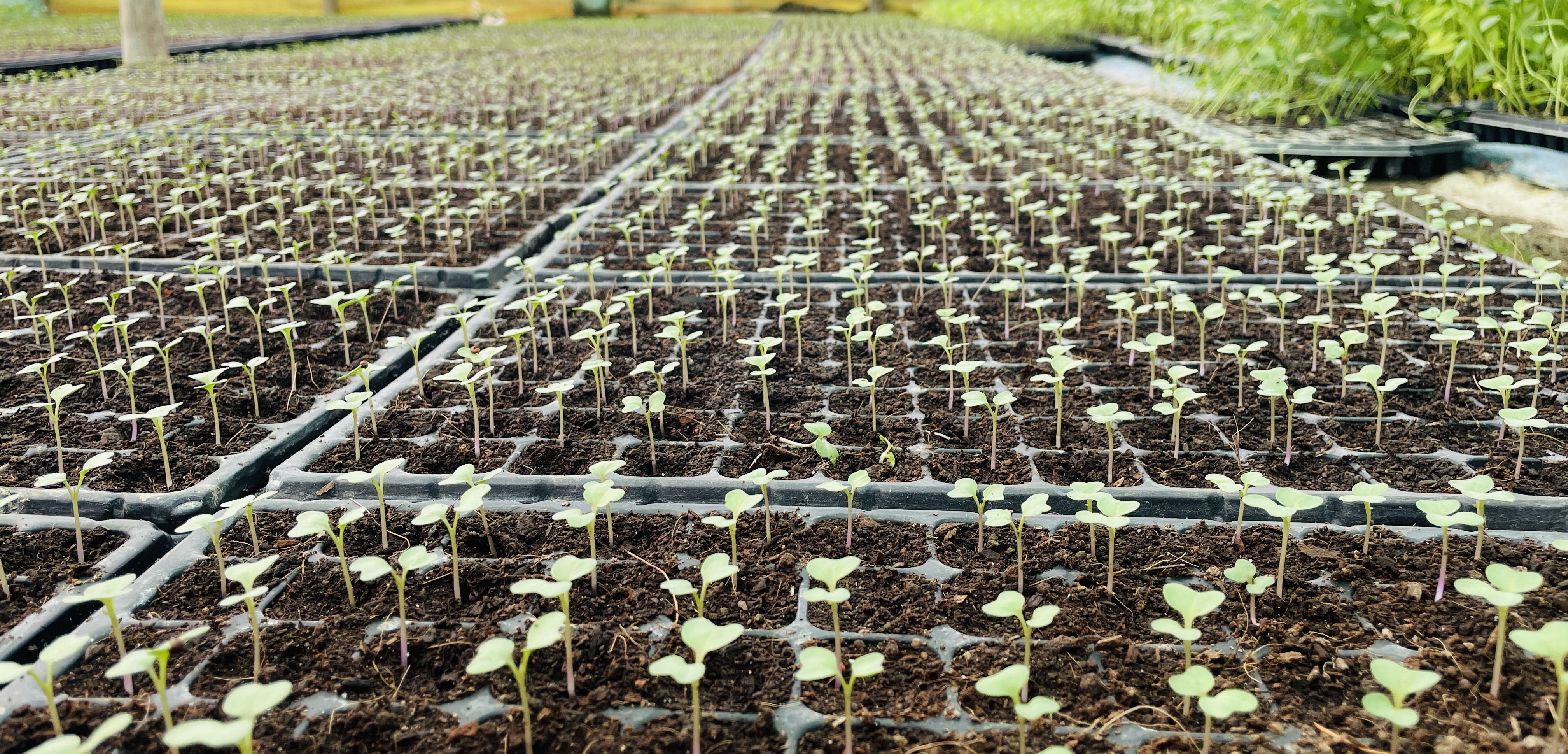
SERA Bangladesh conducted an impact study to evaluate the effectiveness of Cocodust-based nursery technology as a sustainable alternative to conventional soil-based seedling production under the Ecology Friendly Safe Vegetable and Crop Production & Marketing Sub-project of the Rural Microenterprise Transformation Project (RMTP), implemented by JAKAS Foundation in Joypurhat District.
The study examined how this innovative nursery model improves seedling quality, farm productivity, profitability, and environmental sustainability while strengthening the vegetable value chain.
Through a comparative mixed-method assessment involving beneficiary and non-beneficiary farmers, SERA Bangladesh analyzed crop performance, production costs, input efficiency, profitability, adoption barriers, and market dynamics.
The findings revealed that Cocodust-grown seedlings achieved higher germination rates, lower transplant mortality, improved yields, reduced dependence on chemical inputs, and greater economic returns compared to traditional nursery practices. The study also highlighted opportunities for women and youth entrepreneurship, climate-resilient agriculture, and sustainable rural livelihoods.
Funded by